
Beyond the Headlines: What the IBM Data Breach Whistleblower Allegations Signal for Cybersecurity in Small Businesses and Law Firms
Allegations that a major technology provider may have mishandled sensitive data are more than a headline—they are a stress test for every small business and law firm that relies on third-party platforms. Regardless of how any single case is ultimately resolved, the whistleblower storyline is a clear signal: supply-chain risk is now your risk, and “we’re too small to be a target” is a costly illusion. This article distills what the IBM data breach whistleblower allegations mean for cybersecurity in small businesses and law firms, then translates those lessons into a practical, prioritized action plan you can begin implementing this quarter.
- Why the Allegations Matter for Small Firms and Boutiques
- The New Risk Equation: Vendor Sprawl, Privileged Data, and Regulatory Heat
- How Attackers Really Get In: Law-Firm-Specific Threat Paths
- A Right-Sized Cybersecurity Framework for 10–100 Person Firms
- The Vendor Diligence and Contract Playbook (Post-Allegations Edition)
- Incident Response Readiness: Your First 72 Hours
- Governance, Culture, and Next Steps
Why the Allegations Matter for Small Firms and Boutiques
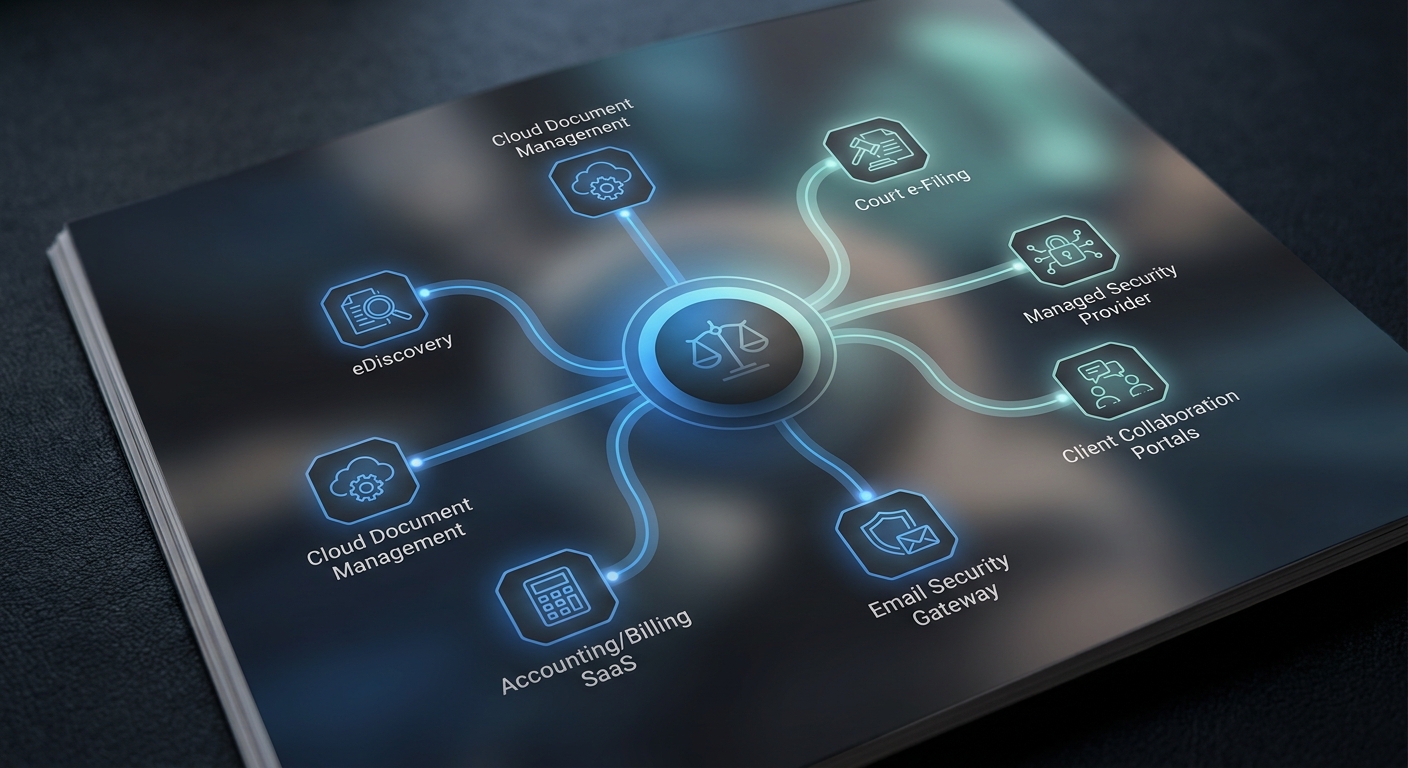
When a whistleblower claims that a marquee vendor experienced or concealed a data incident, the implications cascade far beyond the Fortune 500. Small firms rely on the same cloud infrastructure, the same managed service providers (MSPs), and the same SaaS building blocks—for email, document management, eDiscovery, time and billing, and client collaboration. If a large provider can stumble, your firm can, too. More importantly, your clients and insurers now assume breaches are a matter of “when,” not “if,” and will judge your readiness accordingly.
Expert insight: The core lesson of any high-profile allegation isn’t “don’t use big vendors”—it’s “assume vendors will fail, and design your security, contracts, and incident response so one failure doesn’t become your catastrophe.”
This is a pivotal mindset shift for managing cybersecurity in small businesses and law firms: treat vendor incidents as predictable hazards, not black swans. That means tightening data minimization, segmenting privileges, building auditable vendor controls, and rehearsing incident response with the same seriousness you bring to trial prep.

The New Risk Equation: Vendor Sprawl, Privileged Data, and Regulatory Heat
Three forces are reshaping risk for smaller organizations and boutiques:
- Vendor sprawl: Even a 25-person practice may use 30–60 external services when you include email, calendaring, DMS, eDiscovery, e-filing, legal research, billing, CRM, messaging, and niche client portals. Each integration is a potential control gap or data egress path.
- Privileged information density: Law firms are high-value targets because they concentrate M&A plans, intellectual property, health and financial records, and litigation strategy. The “data gravity” around client matters makes you attractive to criminal groups and nation-state actors—regardless of size.
- Rising regulatory and contractual obligations: Clients increasingly demand attestations (e.g., to NIST-aligned controls or SOC reports), cyber insurance questionnaires are getting tougher, and breach notification timelines shorten with every rulemaking and contract refresh.
The whistleblower narrative underscores a critical truth: you can outsource services, but you cannot outsource accountability. If a vendor incident exposes client confidences, your ethical and contractual duties remain. The practical response is to engineer resilience—limit what vendors can access, verify the specific controls they run on your data, and maintain a tested plan to contain, investigate, and notify when things go wrong.
How Attackers Really Get In: Law-Firm-Specific Threat Paths
Understanding how firms are actually compromised helps you invest where it counts. In boutiques and small professional services organizations, these threat paths dominate:
- Credential replay and MFA fatigue: Stolen or reused passwords still open the door, and “push bombing” can trick staff into approving fraudulent prompts. Hardware security keys (FIDO2) and number-matching stop most of this dead.
- Compromised vendor or MSP tooling: If your MSP’s remote management tool is hijacked, attackers can deploy ransomware across every client in minutes. Treat MSP access like a domain admin—least privilege, audited, and segmented.
- Email account takeover (ATO): Once in, attackers quietly set forwarding rules to exfiltrate sensitive emails, watch wire instructions, and launch convincing BEC scams. Continuous monitoring for mailbox rules and impossible travel alerts is essential.
- Third-party application tokens: OAuth grants to timesavers and plug-ins can persist even after password resets. Review and prune tokens quarterly; disable high-risk grants by default.
- Data oversharing via collaboration links: “Anyone with the link” permissions are convenient—and a gift to attackers. Default to time-bound, user-specific sharing with watermarking for high-sensitivity folders.
The IBM whistleblower storyline—true or not—spotlights a sobering reality: an incident at a provider can grant adversaries a shortcut around your perimeter. Your counter is to reduce blast radius with strong identity controls, vendor segmentation, and continuous monitoring that doesn’t assume benign intent.
A Right-Sized Cybersecurity Framework for 10–100 Person Firms
Enterprise frameworks like the NIST Cybersecurity Framework and the CIS Critical Security Controls are excellent guides, but the art for small businesses and law firms is right-sizing. Below is a practical stack you can implement in quarters—not years—while aligning to recognized standards. Each control is paired with a “why it matters” that ties back to lessons from vendor-led incidents.
Identity and Access
- Single Sign-On (SSO) + enforced MFA across all critical applications, with phishing-resistant methods (FIDO2 keys, platform biometrics, or number-matching). Why: Short-circuits credential replay and reduces risk if a vendor is compromised.
- Privileged Access Management (PAM) lite for admin accounts: just-in-time elevation, session recording for MSP actions, and separate admin workstations. Why: Limits vendor or attacker blast radius.
Data Protection
- Data classification and tagging for client-matter repositories (Public/Confidential/Privileged) with automated policies for sharing, DLP, and watermarking. Why: Keeps privileged confidences from flowing into lower-control apps.
- Full-disk encryption and automatic key escrow for all laptops, with remote wipe. Why: Neutralizes lost/stolen device risk during incidents.
Email and Collaboration
- Business Email Compromise (BEC) guardrails: external sender banners, enforced DKIM/DMARC, and policy-based payment verification workflows. Why: Prevents attacker monetization during or after vendor incidents.
- Auto-expiring, user-specific links with default “view only” for sensitive shares; ban “anyone with link” on privileged folders. Why: Minimizes data leakage if link harvesting occurs.
Endpoint and Network
- EDR/XDR with managed detection (24/7) and automated isolation. Why: Detects hands-on-keyboard activity often seen in supply-chain breaches.
- Least-privilege workstations: remove local admin; elevate via ticketed workflow. Why: Blocks lateral movement from compromised SaaS to endpoint.
Monitoring and Response
- Centralized logging (SIEM-lite) for identity, email, endpoint, and key SaaS platforms, retained for 6–12 months. Why: Investigations hinge on log completeness—especially with vendor involvement.
- Tabletop exercises twice a year including your MSP and critical vendors. Why: Surfaces coordination gaps before you’re on the clock.
| Control Area | Baseline (Month 1–2) | Enhanced (Month 3–6) | Advanced (6–12 Months) |
|---|---|---|---|
| Identity | SSO + MFA required | Phishing-resistant MFA; conditional access | Just-in-time admin; PAM session recording |
| Data | Encrypt devices; shared drive hygiene | Data classification; DLP for email/shares | Automated labeling; client-specific policies |
| DMARC monitoring; external tag | Payment workflow checks; rule-change alerts | Adaptive BEC analytics; impersonation defense | |
| Endpoint | EDR deployed; remove local admin | Managed detection and response | Attack surface reduction; device isolation playbooks |
| Monitoring | Centralize critical logs | Alert tuning + runbooks | Threat hunting; SaaS anomaly detection |
| Readiness | IR contacts and 72-hour checklist | Vendor tabletop; breach notification templates | Client-specific IR annexes; annual wargame |

The Vendor Diligence and Contract Playbook (Post-Allegations Edition)
After any whistleblower claim about a major provider, clients and boards ask the same question: “How do we know our vendors won’t put us at risk?” Your answer is a repeatable due diligence process and contract language that converts promises into enforceable obligations.
Due Diligence Essentials
- Scope what they actually touch: Identify what data types a vendor processes (PII, PHI, financials, privileged matter files), where they store it, and which sub-processors see it.
- Evidence over attestations: Request independent audits (e.g., SOC 2 or ISO 27001), penetration test summaries, and secure development lifecycle artifacts. Verify corrective actions, not just certifications.
- Identity and access specifics: Confirm phishing-resistant MFA for vendor staff, least-privilege access, and break-glass procedures for emergencies.
- Logging and retention: Ensure the vendor can provide the logs you’ll need for investigation for at least 6–12 months and that time is synchronized (NTP) for chain-of-custody clarity.
- Incident response alignment: Map notification timelines and points of contact to your IR plan; require participation in joint tabletop exercises once a year.
Contract Clauses that Matter
- Security controls by reference: Incorporate named frameworks (e.g., NIST CSF, CIS Controls) and specific controls (MFA, encryption at rest/in transit, EDR on admin endpoints).
- Notification timeline and content: Require prompt notice of security incidents (e.g., within 24–72 hours) with minimum details: scope, systems, data categories, indicators, and containment status.
- Audit and verification rights: Permit independent assessments and supply of redacted but meaningful evidence. Include remedies for failure to cooperate.
- Sub-processor transparency: Pre-approve or maintain a change log; require the same or stronger controls for all sub-processors.
- Liability and indemnification: Tie financial liability caps to data sensitivity and regulatory exposure; include costs for forensics, notification, credit monitoring, and legal counsel.
Incident Response Readiness: Your First 72 Hours
The first three days decide whether an incident becomes a headline or a contained blip. Create a checklist you can run under pressure, including the scenario where a vendor triggers the event. Adapt the following to your firm’s size and tools.
72-Hour Breach Navigation Checklist
- Triage and contain (Hours 0–8): Isolate affected endpoints; revoke suspicious tokens; force password resets and reissue keys if necessary; suspend vendor integrations involved in the alert.
- Assemble the team (Hours 0–8): Engage internal lead, MSP, key vendor security contact, outside counsel (privilege), and insurance panel forensics if applicable.
- Preserve evidence (Hours 0–24): Lock logs, snapshots, mailbox audit trails, and admin activity recordings. Don’t wipe devices prematurely.
- Establish facts (Hours 8–36): Define the who/what/when: initial vector, accounts/systems touched, data categories and volume, and whether exfiltration occurred.
- Decide notifications (Hours 24–60): With counsel, determine regulatory, client, insurer, and law enforcement notifications. Prepare clear, non-speculative statements.
- Remediate and harden (Hours 36–72): Patch misconfigurations, roll keys, prune access, enable additional logging, and set up enhanced monitoring for 30–60 days.
Rehearsal is everything. Include your MSP and the top three vendors in a semiannual tabletop so you’re not trading NDAs and call-in details mid-crisis. Align your plan with recognized guidance such as the NIST Computer Security Incident Handling framework (see NIST) and the CIS Controls (Center for Internet Security).

Governance, Culture, and Next Steps
Tools don’t fix culture. The most effective small-firm programs clarify ownership and bake security into daily operations. Use the RACI-style outline below to make cybersecurity visible and executable.
Lightweight Governance for Small Firms
- Accountable (A): Managing partner or COO. Owns budget, risk appetite, and vendor contracts.
- Responsible (R): IT lead or MSP. Executes controls, monitoring, and patching; maintains IR runbooks.
- Consulted (C): Practice leaders and outside counsel. Advise on data sensitivity, client obligations, and privilege considerations.
- Informed (I): All staff. Receive role-based training and breach communications.
Security Habits that Compound
- Quarterly access reviews: Remove stale accounts, revoke “temporary” admin, and prune OAuth tokens.
- Just-in-time training: Micro-lessons focused on current threats (e.g., payment fraud, MFA fatigue) embedded in workflows.
- Change control basics: Ticket and peer-review changes to email rules, identity policies, and firewall settings—especially by vendors or MSPs.
- Vendor days: Twice a year, invite top vendors/MSP to your tabletop and to a roadmap session on logs, MFA, and incident coordination.
Finally, recalibrate your story to clients and insurers. Don’t promise perfection; demonstrate discipline. Share your control map, your tabletop cadence, and how you minimize vendor blast radius. It’s the difference between “trust us” and “verify us”—and in today’s climate, the latter wins every time.
Conclusion
High-profile whistleblower allegations remind us that even the biggest technology partners can face lapses—and that the consequences roll downhill to small businesses and law firms that depend on them. The path forward isn’t fear; it’s engineering for failure. Start with identity, data minimization, and vendor segmentation. Insist on evidence, not assurances, in your contracts. Rehearse your first 72 hours so you’re coordinated when seconds matter. Do these things consistently, and you’ll convert a concerning headline into practical resilience that clients, insurers, and regulators recognize as maturity—not luck.
Ready to explore how you can streamline your processes? Reach out to A.I. Solutions today for expert guidance and tailored strategies.