GM’s $12.75M California Driver Privacy Settlement: 12 Practical Takeaways For Law Firms And Professional Services
General Motors’ $12.75 million California driver privacy settlement is more than an automotive headline—it’s a blueprint for how regulators expect every business to treat sensitive data in 2026. For small and boutique law firms, attorneys, and operations leaders, the case serves as a real-world stress test of data minimization, consent, and vendor oversight. This article distills what happened, why it matters to legal operations, and how to turn the lessons into a pragmatic 30–90 day compliance plan that strengthens client trust and reduces risk across your practice.
- What happened and why it matters now
- The legal signals: data minimization, consent, and injunctive terms
- Where your firm is exposed: a practical risk map
- A 30–60–90 day “Driver Data Governance” playbook
- Quick-reference table: Allegations vs. requirements vs. firm actions
- Tools, contracts, and workflows that scale
- Conclusion
What happened and why it matters now
On May 8, 2026, California’s Attorney General announced a $12.75 million settlement with General Motors over allegations that the company sold the names, contact information, geolocation, and driving behavior of hundreds of thousands of Californians to two data brokers, allegedly without adequate notice or consent. The agencies characterized it as the largest California Consumer Privacy Act (CCPA) penalty to date and the first enforcement action centered on the law’s data minimization principle. ([oag.ca.gov](https://oag.ca.gov/news/press-releases/when-it-comes-data-privacy-consumers-must-be-driver%E2%80%99s-seat-attorney-general))
According to the state, GM collected the data via its OnStar services and sold it between 2020 and 2024 to Verisk Analytics and LexisNexis Risk Solutions for use in driver-scoring products marketed to insurers. Notably, California regulators said drivers in the state did not see rate increases because California insurance rules prohibit using such driving data to set rates—yet the sales still allegedly violated privacy law due to deficient disclosure, consent, and purpose limitations. ([oag.ca.gov](https://oag.ca.gov/news/press-releases/when-it-comes-data-privacy-consumers-must-be-driver%E2%80%99s-seat-attorney-general))
For law firms and professional services organizations, the settlement’s injunctive terms are the headline: a five-year halt on selling driving data to consumer reporting agencies; deletion of retained driving data within 180 days (absent fresh, express consent); requests to downstream brokers to delete; and a requirement to stand up and report on a robust privacy program. These obligations foreshadow what regulators may expect of any business handling sensitive telemetry, location, or behavioral data—regardless of industry. ([oag.ca.gov](https://oag.ca.gov/news/press-releases/when-it-comes-data-privacy-consumers-must-be-driver%E2%80%99s-seat-attorney-general))

The legal signals: data minimization, consent, and injunctive terms
Regulators emphasized two interlocking principles—transparency/consent and data minimization/purpose limitation. In plain terms: tell people clearly what you collect, why, with whom you share it, and don’t repurpose or retain it beyond what’s necessary for the stated service. The settlement underscores that privacy promises in public-facing policies must match actual data flows and contracts across your vendor ecosystem. ([oag.ca.gov](https://oag.ca.gov/news/press-releases/when-it-comes-data-privacy-consumers-must-be-driver%E2%80%99s-seat-attorney-general))
“Largest CCPA penalty in California history to date and first data minimization case,” California authorities said when announcing the settlement—signaling heightened scrutiny of retention and repurposing even when pricing harms aren’t proven in-state. ([oag.ca.gov](https://oag.ca.gov/news/press-releases/when-it-comes-data-privacy-consumers-must-be-driver%E2%80%99s-seat-attorney-general))
Four requirements stand out as broadly instructive for all firms that touch sensitive client or employee data (including location, biometrics, telematics, or behavioral analytics):
- 5-year moratorium on selling driving data to consumer reporting agencies—this is a bright-line restriction that illustrates how regulators can impose time-bound bans when data uses cross the line. ([oag.ca.gov](https://oag.ca.gov/news/press-releases/when-it-comes-data-privacy-consumers-must-be-driver%E2%80%99s-seat-attorney-general))
- Deletion clocks: delete retained driving data within 180 days unless you secure fresh, express consent; and ask downstream brokers to delete as well—showing accountability extends beyond your firewall. ([oag.ca.gov](https://oag.ca.gov/news/press-releases/when-it-comes-data-privacy-consumers-must-be-driver%E2%80%99s-seat-attorney-general))
- Programmatic governance: stand up a documented privacy program that assesses, mitigates, and reports risk to designated agencies—compliance is not a one-off memo; it’s an ongoing operational discipline. ([oag.ca.gov](https://oag.ca.gov/news/press-releases/when-it-comes-data-privacy-consumers-must-be-driver%E2%80%99s-seat-attorney-general))
- Truth-in-privacy: misalignment between privacy statements and actual data practices can be an independent violation; saying “we don’t sell” while engaging in sales or similarly broad transfers can trigger enforcement. ([oag.ca.gov](https://oag.ca.gov/news/press-releases/when-it-comes-data-privacy-consumers-must-be-driver%E2%80%99s-seat-attorney-general))
Where your firm is exposed: a practical risk map
Even if you don’t operate a connected-vehicle platform, your firm may handle analogous data types—and face similar risks—through casework, firm operations, or vendors:
- Personal injury, transportation, employment, and insurance matters: You may collect or request telematics, dashcam, app-derived location histories, or OEM data as evidence. Ensure your intake, consent, and discovery workflows account for lawful basis, minimization, chain-of-custody, and retention.
- Client services and apps: Client portals, scheduling tools, or ride-hailing arrangements can embed location or behavioral analytics. Align disclosures and purpose limitations so analytics don’t become “secondary uses.”
- Firm operations: Visitor Wi‑Fi logs, building access systems, employee time-tracking, office vehicle use, and MDM/endpoint telemetry all generate sensitive behavioral data. Treat them like regulated personal information.
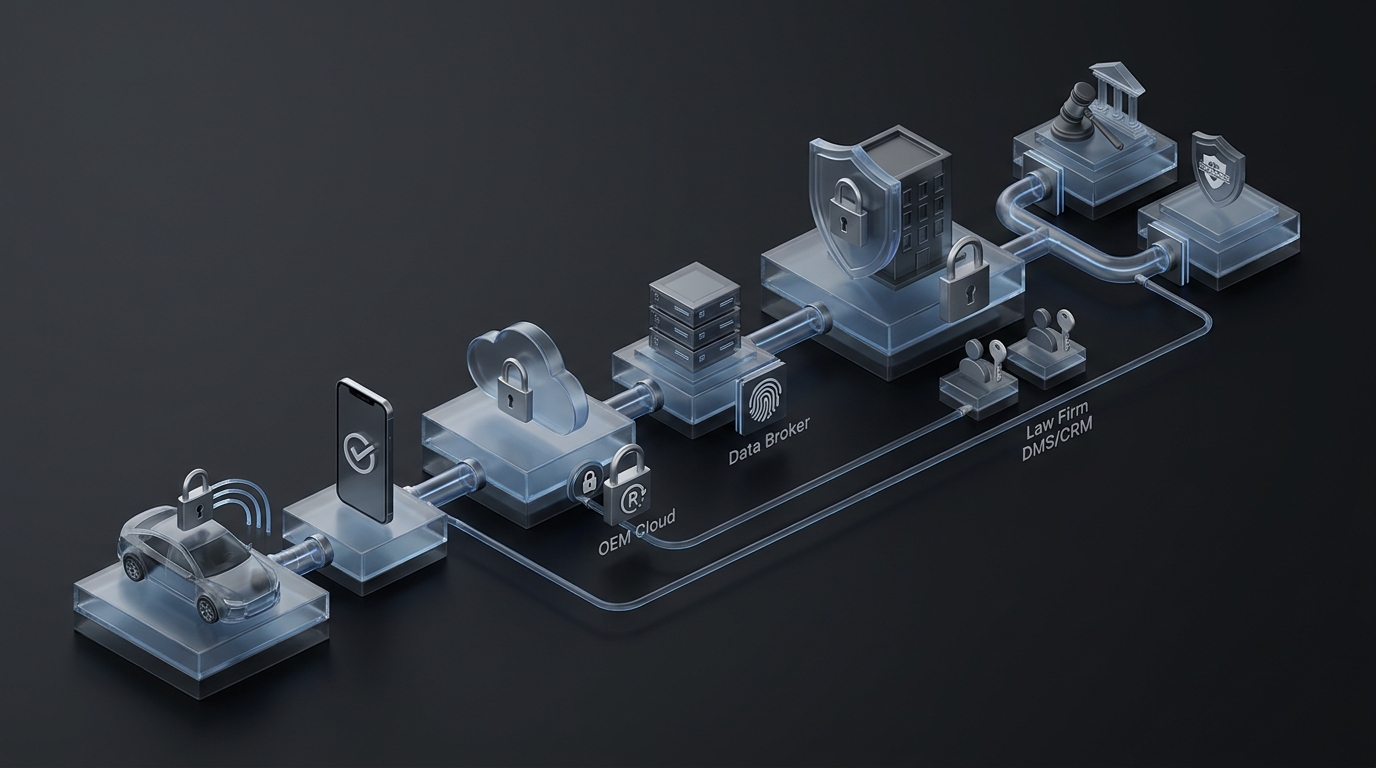
- Vendor stack: DMS/CRM/eDiscovery providers, data enrichment tools, and research platforms may be “brokers” or share with them. Contractual clarity about “sale,” “share,” “use,” and “consumer reporting agency” status is essential—plus audit rights and deletion support.
Finally, be mindful of cross-jurisdictional exposure: the same dataset can be regulated differently across clients and matters. California’s posture suggests other states and federal authorities may follow suit with similar theories and remedies. ([techcrunch.com](https://techcrunch.com/2026/05/09/gm-agrees-to-pay-12-75m-in-california-driver-privacy-settlement/))

A 30–60–90 day “Driver Data Governance” playbook
Use this compact action plan to operationalize the settlement’s lessons without boiling the ocean. Assign each stream an accountable owner and define “done” with artifacts (policies, maps, logs, tickets) your auditors could review.
First 30 days: Stabilize and map
- Issue a hold-and-review on location/telematics collection and sharing in live matters and firm systems; confirm there’s a lawful basis and a documented purpose for each data flow. ([oag.ca.gov](https://oag.ca.gov/news/press-releases/when-it-comes-data-privacy-consumers-must-be-driver%E2%80%99s-seat-attorney-general))
- Produce a simple data map covering what is collected, why, where it is stored, retention clocks, and downstream recipients (brokers, research providers, cloud tools).
- Consent refresh: Where your disclosures are vague or outdated, prepare refreshed notices and explicit consent language for any secondary uses.
- Policy-gap check against your public privacy statement: eliminate “say/do” mismatches around “sale,” “share,” retention, and consumer rights handling. ([oag.ca.gov](https://oag.ca.gov/news/press-releases/when-it-comes-data-privacy-consumers-must-be-driver%E2%80%99s-seat-attorney-general))
Days 31–60: Reduce and align
- Minimize: Stop collecting sensitive telemetry you don’t actively use to deliver the client service; set purpose-bound retention periods (measured in days or months, not “indefinite”). ([privacy.ca.gov](https://privacy.ca.gov/2026/05/when-it-comes-to-data-privacy-consumers-must-be-in-the-drivers-seat-attorney-general-bonta-partners-secure-12-75-million-general-motors-privacy-settlement/))
- Broker diligence: Identify any vendors that may qualify as data brokers or consumer reporting agencies; tighten DPAs, ban onward sales, and require deletion assistance within 180 days of request. ([oag.ca.gov](https://oag.ca.gov/news/press-releases/when-it-comes-data-privacy-consumers-must-be-driver%E2%80%99s-seat-attorney-general))
- Access controls: Restrict who can query location/behavioral data; log access in a tamper‑evident system.
- Client-facing language: Update engagement letters and intake forms to clarify what you collect, how long you keep it, and where it may be shared (e.g., insurers, courts, experts).
Days 61–90: Sustain and evidence
- Program governance: Stand up a light-weight privacy review process for new matters/tools; calendar recurring audits and DPIAs where sensitive data is involved. ([oag.ca.gov](https://oag.ca.gov/news/press-releases/when-it-comes-data-privacy-consumers-must-be-driver%E2%80%99s-seat-attorney-general))
- Deletion workflows: Test 180‑day deletion and downstream deletion requests; preserve logs as evidence of compliance. ([oag.ca.gov](https://oag.ca.gov/news/press-releases/when-it-comes-data-privacy-consumers-must-be-driver%E2%80%99s-seat-attorney-general))
- Training: Run a 45‑minute practical training for attorneys, paralegals, and IT on minimization, consent, and broker/CRA red flags.
- Incident readiness: Update your playbook to include mis-disclosure or misrepresentation scenarios, not just breaches.
Quick-reference table: Allegations vs. requirements vs. firm actions
| Regulatory focus (from GM case) | What the law expects | Action for law firms |
|---|---|---|
| Sale of sensitive driving/location data without adequate notice/consent to two data brokers (2020–2024). ([oag.ca.gov](https://oag.ca.gov/news/press-releases/when-it-comes-data-privacy-consumers-must-be-driver%E2%80%99s-seat-attorney-general)) | Clear, accurate disclosure; lawful basis; opt-out where applicable; records of consent. | Refresh privacy notices; implement auditable consent capture in intake/portal tools. |
| Misalignment between privacy policy language and actual data practices. ([oag.ca.gov](https://oag.ca.gov/news/press-releases/when-it-comes-data-privacy-consumers-must-be-driver%E2%80%99s-seat-attorney-general)) | Truth-in-privacy: statements must match real data flows and contracts. | Annual “say/do” audit across public policy, vendor DPAs, and system logs. |
| Retention beyond operational needs; later repurposed for insurance uses. ([oag.ca.gov](https://oag.ca.gov/news/press-releases/when-it-comes-data-privacy-consumers-must-be-driver%E2%80%99s-seat-attorney-general)) | Data minimization and purpose limitation; only keep what you need, for as long as needed. | Adopt purpose-bound retention schedules with auto-deletion and legal hold exceptions. |
| Injunctive terms: 5-year ban on selling to CRAs; 180-day deletion; downstream deletion; documented program and reports. ([oag.ca.gov](https://oag.ca.gov/news/press-releases/when-it-comes-data-privacy-consumers-must-be-driver%E2%80%99s-seat-attorney-general)) | Programmatic, provable governance and vendor accountability. | Build deletion SLAs with vendors; maintain DPIA and assessment artifacts; schedule attestations. |
| Regulators noted no direct insurance impact in CA due to state rules—yet privacy violations remained actionable. ([oag.ca.gov](https://oag.ca.gov/news/press-releases/when-it-comes-data-privacy-consumers-must-be-driver%E2%80%99s-seat-attorney-general)) | Harm not required to enforce disclosure/minimization obligations. | Don’t rely on “no harm” arguments; fix notice/consent/minimization gaps proactively. |
Tools, contracts, and workflows that scale
Technology guardrails
- Consent and preference management: Implement consent logs at the point of collection (client intake, portals, mobile apps). Favor tools that timestamp, version, and export consent records for audits.
- Privacy-by-config: In DMS/CRM/eDiscovery, limit collection fields for location/telematics to “needed only,” default to off, and apply data classification tags to trigger retention and access policies.
- Automated retention: Use policy engines to auto-delete or archive after the defined period, with legal hold overrides. The GM case highlights that “keep-it-forever” is no longer defensible. ([privacy.ca.gov](https://privacy.ca.gov/2026/05/when-it-comes-to-data-privacy-consumers-must-be-in-the-drivers-seat-attorney-general-bonta-partners-secure-12-75-million-general-motors-privacy-settlement/))
- Vendor telemetry gates: Where a vendor SDK or portal can capture location or behavior by default, disable or narrow scopes, and contractually bar onward sales/sharing to brokers or CRAs.
- Downstream deletion orchestration: Build a simple workflow (ticketing + API/webform) to send deletion requests to downstream recipients and log confirmations—especially for any broker‑like counterparties. ([oag.ca.gov](https://oag.ca.gov/news/press-releases/when-it-comes-data-privacy-consumers-must-be-driver%E2%80%99s-seat-attorney-general))
Contractual must-haves
- No-sale/no-share clauses aligned to CCPA/CPRA definitions, explicitly prohibiting transfers to data brokers or consumer reporting agencies without written authorization.
- Purpose limitation language: restrict vendor use to enumerated services; prohibit secondary analytics or model training on your data unless expressly allowed.
- Deletion SLAs: 30–180 day deletion windows upon request; require vendor to cascade deletion to their subprocessors and provide proof. ([oag.ca.gov](https://oag.ca.gov/news/press-releases/when-it-comes-data-privacy-consumers-must-be-driver%E2%80%99s-seat-attorney-general))
- Audit and attestations: Annual privacy assessments and incident reporting with specific metrics (access logs, data flow diagrams, retention outcomes).
- Broker/CRA representation: Vendors must disclose if they are registered as data brokers or operate as CRAs and maintain compliance with applicable law.
Workflow patterns for legal teams
- Matter intake: Add a “sensitive data checklist” (location, biometrics, vehicle telematics, app histories). Confirm lawful basis and minimization before accepting large datasets.
- Discovery: When requesting or producing telematics, specify time windows, data types, and recipients. Use protective orders for any location streams.
- Client education: Brief clients that connected devices—from cars to phones—create discoverable trails. Provide deletion/retention guidance to prevent over-collection and spoliation.
- Ops and HR: Treat employee telemetry (badges, MDM, timekeeping) with the same rigor: disclose, minimize, and set short retention windows with legal hold exceptions.
A concise readiness checklist
- Map where any location/behavioral data enters or leaves your firm.
- Align public privacy statements with actual practices and contracts. ([oag.ca.gov](https://oag.ca.gov/news/press-releases/when-it-comes-data-privacy-consumers-must-be-driver%E2%80%99s-seat-attorney-general))
- Define specific purposes for each data flow; de-scope what you don’t need. ([privacy.ca.gov](https://privacy.ca.gov/2026/05/when-it-comes-to-data-privacy-consumers-must-be-in-the-drivers-seat-attorney-general-bonta-partners-secure-12-75-million-general-motors-privacy-settlement/))
- Set retention timers measured in days/months; enable auto-deletion. ([oag.ca.gov](https://oag.ca.gov/news/press-releases/when-it-comes-data-privacy-consumers-must-be-driver%E2%80%99s-seat-attorney-general))
- Capture explicit consent for any secondary uses and log it.
- Classify and restrict access to telemetry/location categories.
- Harden vendor agreements: no sale/share, deletion SLAs, audit rights.
- Establish downstream deletion request workflows and keep evidence logs. ([oag.ca.gov](https://oag.ca.gov/news/press-releases/when-it-comes-data-privacy-consumers-must-be-driver%E2%80%99s-seat-attorney-general))
- Schedule quarterly privacy reviews for high-risk matters/systems.
- Train staff with practical, role‑based scenarios.
Conclusion
GM’s $12.75M California driver privacy settlement marks a turning point: regulators are enforcing not only breaches, but also mismatches between promises and practices, and they are demanding programmatic evidence of minimization, deletion, and downstream control. For small firms and professional services organizations, the path to resilience is clear—map your sensitive data, reduce your footprint, align contracts and policies to reality, and prove it with logs and reports. Treat these steps as an operations upgrade, not just a compliance chore; done right, they’ll reduce risk, accelerate client onboarding, and build durable trust in a data-driven legal market. ([oag.ca.gov](https://oag.ca.gov/news/press-releases/when-it-comes-data-privacy-consumers-must-be-driver%E2%80%99s-seat-attorney-general))
Ready to explore how you can streamline your processes? Reach out to A.I. Solutions today for expert guidance and tailored strategies.