

What Cerebras’ IPO Signals for AI Hardware—and How Small Firms and Law Practices Can Capitalize
AI demand keeps outpacing supply, and law firms feel the pinch: long model runtimes, unpredictable cloud bills, and security questions about client data movement. Cerebras Systems’ move to go public is a pivotal moment for AI hardware. It’s not just a Wall Street story—it’s a signal that specialized chips and new distribution models are about to reshape how small businesses and boutique law firms buy, deploy, and govern AI. This article translates the headline into practical steps: how Cerebras’ IPO could influence costs, access, and risk—and how you can turn those shifts into faster matters, tighter SLAs, and measurable ROI.
- Why Cerebras’ IPO Matters Now
- Decoding Cerebras’ Hardware Innovation in Plain English
- Opportunities for Small Firms and Law Practices
- Build vs. Buy: A Practical Procurement Playbook
- Compliance, Risk, and Vendor Diligence for Regulated Teams
- A 12‑Week Roadmap to Measurable ROI
- Conclusion
Why Cerebras’ IPO Matters Now
On April 17, 2026, Cerebras filed a public S‑1 registration statement for an initial public offering. That milestone matters for buyers because it tends to unlock distribution partnerships, catalyze supply expansion, and force sharper disclosures about revenue quality, backlog, and customer concentration—inputs you can actually use in due diligence and contracting. (cerebras.ai)
“Cerebras reported $510 million in 2025 revenue,” according to its April 17, 2026 filing. (news.bloomberglaw.com)
Media coverage of the S‑1 also highlights a key buyer takeaway: the ecosystem around Cerebras is maturing, with reported agreements pointing to broadened access beyond early flagship customers. For small firms, more routes to capacity typically mean shorter queues, more predictable pricing, and options to keep sensitive data closer to home—or in vetted, compliant clouds. (techcrunch.com)

Decoding Cerebras’ Hardware Innovation in Plain English
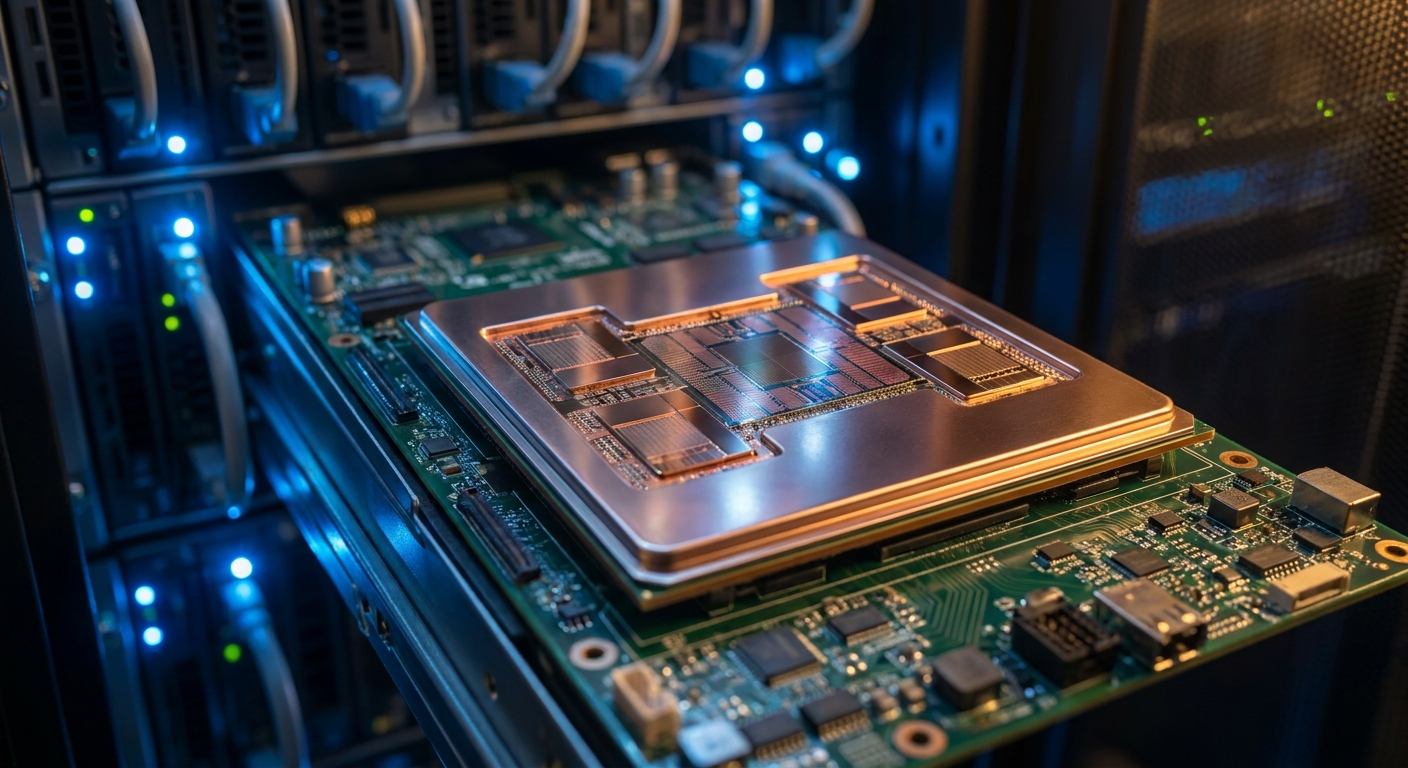
Cerebras is known for the wafer‑scale engine (WSE): instead of many small chips across multiple boards, it uses virtually an entire silicon wafer as one giant chip. For machine learning, that means vast on‑chip compute with tightly coupled memory, which reduces the back‑and‑forth “traffic jams” that slow training and inference on conventional GPU clusters. The newest WSE‑3 (announced March 13, 2024) packs roughly 900,000 compute cores and four trillion transistors on 5 nm, with on‑chip SRAM designed to keep more of your model’s “working set” local for speed and energy efficiency. In practical terms: faster throughput on large transformers and less performance lost to interconnect bottlenecks. (cerebras.net)
Why should a small firm care? Because bottlenecks translate into billable‑hour delays, ballooning cloud invoices, and slower client service. Whether you ever touch a Cerebras box directly, the company’s existence—and a successful public listing—intensifies competition with GPU incumbents, potentially nudging cloud providers and resellers to offer:
- Lower or more predictable unit pricing (per‑token, per‑hour, per‑GB‑served) for AI workloads;
- Turnkey inference “slices” you can reserve like any other SaaS seat;
- Regional availability zones that satisfy data residency and conflict‑wall requirements.
Opportunities for Small Firms and Law Practices
Here are five practical ways Cerebras’ IPO‑era momentum can translate into value for boutique firms and professional service teams.
1) Faster eDiscovery and investigations without runaway cloud bills
Large‑document embeddings, semantic search, and video/audio transcription are compute‑intensive. Expect more “fixed‑rate” inference tiers and appliance‑style offerings (on‑prem or colocation) that price per matter or per terabyte rather than per GPU hour. This helps you quote flat fees confidently and protect margins during spikes.
2) Real‑time transcript and deposition support
Running mid‑sized language models locally or in a dedicated inference slice can enable real‑time summarization, speaker diarization, and issue tagging during depositions, minimizing after‑hours cleanup. Hardware choice affects latency: wafer‑scale systems and optimized inference GPUs can deliver sub‑second response for short‑context tasks.
3) Contract analytics and RAG with higher privacy guarantees
Retrieval‑augmented generation (RAG) thrives on fast vector search and token‑efficient models. As wafer‑scale capacity expands in regulated clouds, you can keep client data within a chosen jurisdiction and leverage private networking plus KMS‑managed encryption—without sending documents to public endpoints.
4) Video evidence processing at scale
For PI, employment, or regulatory matters, firms increasingly process video. Dedicated inference capacity—whether via GPU or wafer‑scale slices—shaves hours off object detection, redaction, and OCR across frames. Throughput gains mean more predictable staffing and tighter SLAs.
5) Knowledge ops for the partnership
Partner intelligence digests, pitch personalization, and cross‑matter precedent search benefit from persistent, low‑latency inference. As competition heats up, expect vendors to bundle orchestration and observability (token logs, model drift) right into capacity contracts—reducing the DevOps lift that’s historically blocked smaller teams.
Build vs. Buy: A Practical Procurement Playbook
Before you price hardware, align on business goals. Use this simple decision framework to keep your team focused:
The 6‑M Framework for AI Hardware Decisions
- Mission: What outcomes? (e.g., 24‑hour discovery turnaround; 30% faster review)
- Model: Which models and sizes? (e.g., 7B–13B for summarization; 70B for nuanced drafting)
- Modality: Text only, or also audio/video/images?
- Money: Budget guardrails; tolerance for CapEx vs. OpEx
- Mechanics: Where will it run—on‑prem, private cloud, or managed inference slice?
- Monitoring: What telemetry and controls prove compliance and ROI?
Then compare deployment patterns using total cost of ownership (TCO), risk, and compliance fit. The table below uses indicative 2026 pricing assumptions for mid‑sized firms handling 5–15 concurrent AI tasks; refine with your vendors.
| Option | Upfront Cost | Est. Monthly TCO | Strengths | Trade‑offs | Best For |
|---|---|---|---|---|---|
| Managed cloud inference (GPU) | $0 | $4k–$18k (usage‑based) | Fast start; elastic; broad model catalog | Variable bills; egress fees; data residency diligence | Pilots; bursty workloads; multi‑model testing |
| Reserved inference “slice” (GPU or wafer‑scale) | $0–$10k (setup) | $8k–$25k (committed) | Predictable cost; QoS; compliance add‑ons | Contract lock‑in; capacity planning needed | Steady daily summarization/RAG; SLAs |
| On‑prem inference workstation (1–2 pro GPUs) | $10k–$25k | $1k–$3k (power, support, refresh) | Data stays local; low latency; fixed cost | Limited peak throughput; lifecycle/patch burden | Confidential matters; predictable tasks |
| Colocated appliance or micro‑cluster | $30k–$120k | $2k–$6k (colo, support) | Higher throughput; private networking | CapEx; vendor integration work | Video/redaction at volume; medium firms |
| Access via partner to wafer‑scale capacity | $0–$20k (onboarding) | $10k–$40k (committed) | High throughput; competitive per‑token economics | Ecosystem still maturing; vendor lock‑in risk | Large doc sets; tight deadlines; fixed‑fee matters |

Negotiation levers to use right now
- Price protection: Ask for 6–12 month price holds or usage‑to‑commit conversions as competition increases post‑IPO.
- Burst credits: Secure a small burst pool (e.g., 25–50% above baseline) for discovery spikes without premium rates.
- Latency SLOs: Tie payment to tail‑latency percentiles for specific workloads (e.g., <200ms for 1K‑token summarize).
- Data controls: Require encryption keys you control and audit logs down to prompt/response/token.
- Exit ramps: Stipulate model portability and data export formats to avoid lock‑in.
Compliance, Risk, and Vendor Diligence for Regulated Teams
A public S‑1 exposes a lot you can use in vendor diligence. Cerebras’ filing, and reporting around it, underscores both momentum and concentration risk typical of early hardware disruptors. Read those risk factors closely and translate them into contractual protections (e.g., continuity, substitution rights, and credits if capacity is delayed). (news.bloomberglaw.com)
For law firms, five diligence must‑haves apply regardless of hardware:
- Confidentiality and privilege: Ensure prompts, embeddings, and logs are never used for provider training; require strict tenant isolation with auditability.
- Regionality: Pin workloads to specific regions to satisfy data residency and cross‑border controls.
- Chain of custody: For eDiscovery and investigations, log hash‑based integrity checks and model versions used for each output.
- Vendor solvency and support: Post‑IPO disclosures improve transparency—tie SLAs and support escalation to these metrics.
- Model risk controls: Document red‑team testing, refusal handling, and human‑in‑the‑loop review for drafting or sensitive analyses.
It’s also critical to recognize how architecture affects your risk posture. Wafer‑scale designs reduce cross‑device interconnect complexity, which can simplify performance isolation. Conversely, highly distributed GPU stacks add flexibility but introduce more moving parts to patch, monitor, and cost‑optimize. Use this to drive RFP specificity: latency ceilings, throughput targets, and observability must be measurable and enforceable. (time.com)
A 12‑Week Roadmap to Measurable ROI
Here’s a pragmatic plan that turns market change into outcomes you can show your executive committee.
Weeks 1–2: Define the “money slide” and guardrails
- Pick two KPIs you can measure in 90 days (e.g., average hours to first‑pass review; cost per hour of AI‑assisted review).
- Lock in budget bounds and data policies (regions, encryption, no training on firm data).
Weeks 3–4: Model and workload mapping
- Match target models to tasks: 7B–13B for summarization/classification; larger models for nuanced drafting.
- Estimate concurrency (e.g., 10 parallel summarizations), context lengths, and storage/egress implications.
Weeks 5–6: Pilot two routes to capacity
- Option A: Reserved inference slice (GPU or wafer‑scale) with tail‑latency SLOs.
- Option B: On‑prem workstation for confidential matters; test against A for latency and cost per document.
- Negotiate burst credits tied to discovery peaks and set acceptance thresholds (e.g., 98th‑percentile latency).
Weeks 7–8: Integrate the stack
- Plug your DMS, matter management, and eDiscovery tools into an orchestration layer (workflows for summarize, redact, search).
- Enable structured logging: prompts, responses, token counts, and decisions for audit and billing.
Weeks 9–10: Validate compliance and reliability
- Run a red‑team exercise for data leakage, hallucination, and refusal handling.
- Verify encryption key control, region pinning, and access review with your security team.
Weeks 11–12: Prove ROI and decide
- Compare cost per matter and turnaround time versus baseline; quantify savings and risk reduction.
- Commit to the winning route with a three‑ to six‑month contract and quarterly optimization checkpoints.

Conclusion
Cerebras’ IPO isn’t just a ticker symbol—it’s a catalyst that can reshape how smaller firms access high‑performance AI. The company’s filing and reported partnerships point to more competition, more choice, and, crucially, more predictable ways to buy latency and throughput instead of raw hardware headaches. If you anchor decisions to matter‑level KPIs, insist on measurable SLOs, and negotiate data‑governance by design, you can harness the coming wave—whether your capacity lives in a cloud slice, a colocation rack, or a small on‑prem box. The opportunity is to turn AI infrastructure from an experimental cost center into a disciplined driver of turnaround time, margins, and client experience. (cerebras.ai)
Ready to explore how you can streamline your processes? Reach out to A.I. Solutions today for expert guidance and tailored strategies.